Managing Rumen Acidosis, Bloat & Digestive Disorders in Dairy Cattle: The Veterinary Nutrition Guide
Dr. Surender Soni, B.V.Sc & A.H.
Veterinary Nutritionist & Technical Director
Maintaining optimal digestive efficiency in ruminants is the cornerstone of profitable dairy farming. High-yielding dairy cows and Murrah buffaloes depend entirely on complex microbial fermentation within the rumen to convert fibrous forage, silage, and cereal grains into volatile fatty acids (VFAs), the primary source of metabolic energy and milk precursors. When the delicate ecological balance of the rumen is disrupted, severe metabolic disturbances such as Sub-Acute Ruminal Acidosis (SARA), acute acidosis, tympanites (bloat/आफरा), and simple indigestion rapidly occur.
Understanding Rumen Fermentation Ecology
The rumen operates as an anaerobic microbial fermentation vat harboring trillions of symbiotic bacteria, ciliate protozoa, and anaerobic fungi. Under healthy physiological conditions, the rumen environment maintains a tightly regulated pH between 6.2 and 6.8. In this optimal range, cellulolytic (fiber-digesting) bacteria thrive, breaking down cellulose and hemicellulose into acetate and butyrate—the key biochemical building blocks required by the mammary gland to synthesize milk butterfat.
When dairy cattle consume balanced rations containing sufficient physically effective neutral detergent fiber (peNDF), normal rumination (cud chewing/जुगाली) is stimulated. An adult dairy cow chews her cud for 400 to 500 minutes daily, producing between 100 to 150 liters of saliva rich in sodium bicarbonate and potassium phosphate. This endogenous saliva acts as a continuous natural buffer, neutralizing metabolic acids produced during microbial fermentation.
Pathogenesis of Sub-Acute Ruminal Acidosis (SARA) and Indigestion
Modern dairy diets frequently incorporate excessive quantities of readily fermentable non-structural carbohydrates—such as finely ground wheat, maize, barley, and starch-rich concentrates—to satisfy the immense energy demands of peak lactation. When starch intake outpaces the buffering capacity of rumination, amylolytic bacteria (*Streptococcus bovis*) proliferate exponentially, converting starches into lactic acid.
Because lactic acid is approximately ten times stronger than volatile fatty acids, rumen pH plummets below 5.5, triggering Sub-Acute Ruminal Acidosis (SARA). At this low pH:
Common Signs of Rumen Distress:
Nutritional Strategy: Buffers, Live Probiotics, and Digestive Enzymes
Restoring rumen stability requires a multi-pronged approach that simultaneously neutralizes excess free hydrogen ions, repopulates beneficial microbial flora, and accelerates the enzymatic breakdown of recalcitrant fiber fractions.
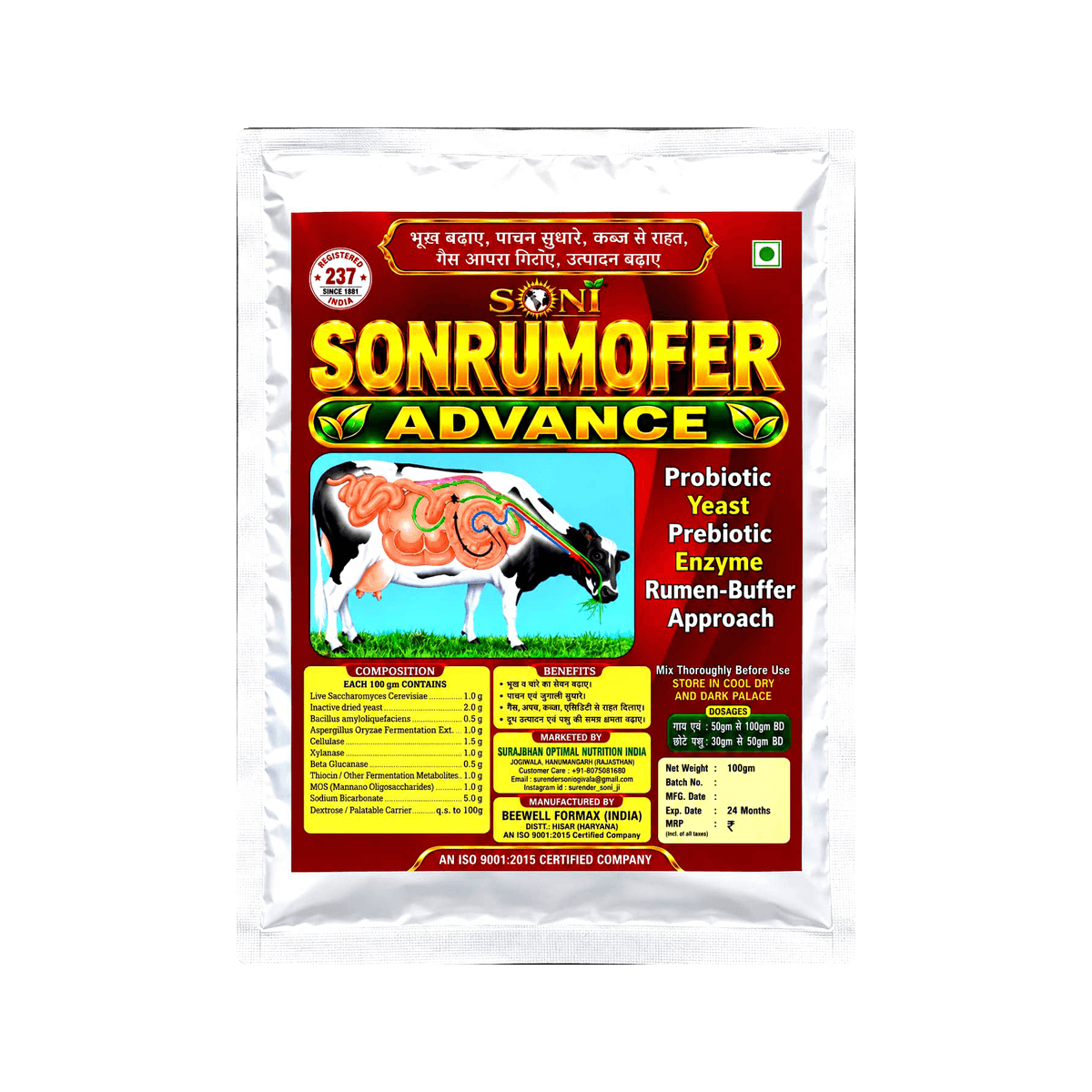
Supplementing with SONRUMOFER ADVANCE delivers an optimal scientific combination of digestive catalysts:
For acute indigestion, off-feed conditions, and post-grain engorgement, administering SONRUMOFER ADVANCE at 50g to 100g twice daily directly stabilizes fermentation and restarts active rumination.
Practical Management Protocols for Dairy Farmers
To prevent recurrent digestive disorders in your herd:
When to Consult a Qualified Veterinarian
While nutritional buffering and probiotic yeast effectively resolve mild to moderate SARA, bloat, and simple indigestion, immediate veterinary intervention is mandatory if you observe:
Frequently Asked Questions (FAQ)
What is the ideal dosage of SONRUMOFER ADVANCE for a cow suffering from indigestion?
For adult dairy cows and buffaloes, administer 50g to 100g twice daily (morning and evening) mixed with palatable feed, wheat flour dough, or dissolved in warm water as a drench. For small ruminants like sheep and goats, administer 30g to 50g twice daily.
Can feeding green fodder cause bloat in buffaloes?
Yes. Rapid consumption of lush, immature leguminous green fodders (such as berseem, lucerne, or alfalfa) rich in soluble proteins creates a stable froth in the rumen that traps gas bubbles, causing frothy bloat. Always feed dry roughage or straw prior to turning cattle onto fresh green fodder.
How quickly does cud chewing return after administering rumen buffers?
When using a live yeast and multi-enzyme formula like SONRUMOFER ADVANCE, microbial fermentation typically stabilizes within 6 to 12 hours, with visible restoration of active cud chewing and appetite.
Does rumen acidosis affect milk fat test?
Yes. Acidic rumen conditions inhibit cellulolytic bacteria, reducing the synthesis of acetic acid. Because acetate is the primary precursor for butterfat synthesis, milk fat percentage drops sharply during SARA.
Shop Formulations Mentioned in this Article
Dr. Surender Soni, B.V.Sc & A.H.Verified Author
Veterinary expert specializing in dairy cattle clinical nutrition, rumen metabolic disorders, and mineral bioavailability. Dedicated to providing dairy farmers across India with evidence-based guidance to maximize milk production and animal longevity.