Milk Fever Prevention and Calving Care: Managing Hypocalcemia with Oral Calcium Gels
Dr. Surender Soni, B.V.Sc & A.H.
Veterinary Nutritionist & Technical Director
The transition period—defined as the three weeks immediately before calving through three weeks post-calving—represents the highest risk window in a dairy cow's life cycle. During this brief physiological transition, dairy cows and high-producing Murrah buffaloes experience dramatic endocrine and metabolic upheavals. The most dangerous acute metabolic disorder during this period is Parturient Paresis, commonly known as Milk Fever or Hypocalcemia. Understanding calcium homeostasis and implementing rapid oral ionic calcium protocols is essential to prevent herd mortality and ensure smooth calving.
The Calcium Homeostasis Crisis at Calving
In a non-lactating pregnant cow, the daily systemic requirement for elemental calcium is relatively modest (approximately 10 to 12 grams per day to support fetal skeletal growth). However, within hours of calving, the sudden onset of colostrum and milk synthesis creates a massive drain on maternal blood calcium reserves:
Consequently, the fresh cow must replace her entire circulating blood calcium pool every two to three hours. To accomplish this, the cow must activate parathyroid hormone (PTH) and renal 1,25-dihydroxyvitamin D3 to mobilize skeletal calcium reserves and increase intestinal calcium absorption. However, this endocrine pathway requires 24 to 48 hours to reach full physiological capacity. During this lag period, circulating serum calcium drops precipitously from normal levels (8.5–10.0 mg/dL) down into life-threatening territory (<5.5 mg/dL).
Clinical vs. Sub-Clinical Hypocalcemia
Veterinary research reveals that while clinical milk fever affects approximately 5% to 8% of dairy cows, sub-clinical hypocalcemia affects an astonishing 40% to 60% of all adult multiparous dairy animals!
Stages of Clinical Milk Fever:
The Hidden Danger of Sub-Clinical Hypocalcemia:
Even when animals do not collapse, sub-clinical hypocalcemia causes severe smooth muscle weakness throughout the body:
Why Oral Ionic Calcium Gels are the Gold Standard for Calving
For decades, intravenous calcium borogluconate was the standard treatment. However, veterinary science emphasizes that IV calcium creates extreme blood calcium spikes that can cause fatal cardiac arrhythmias, followed by a rebound hypocalcemia 12 hours later as calcitonin is triggered.
Oral ionic calcium gels represent the superior preventive protocol:
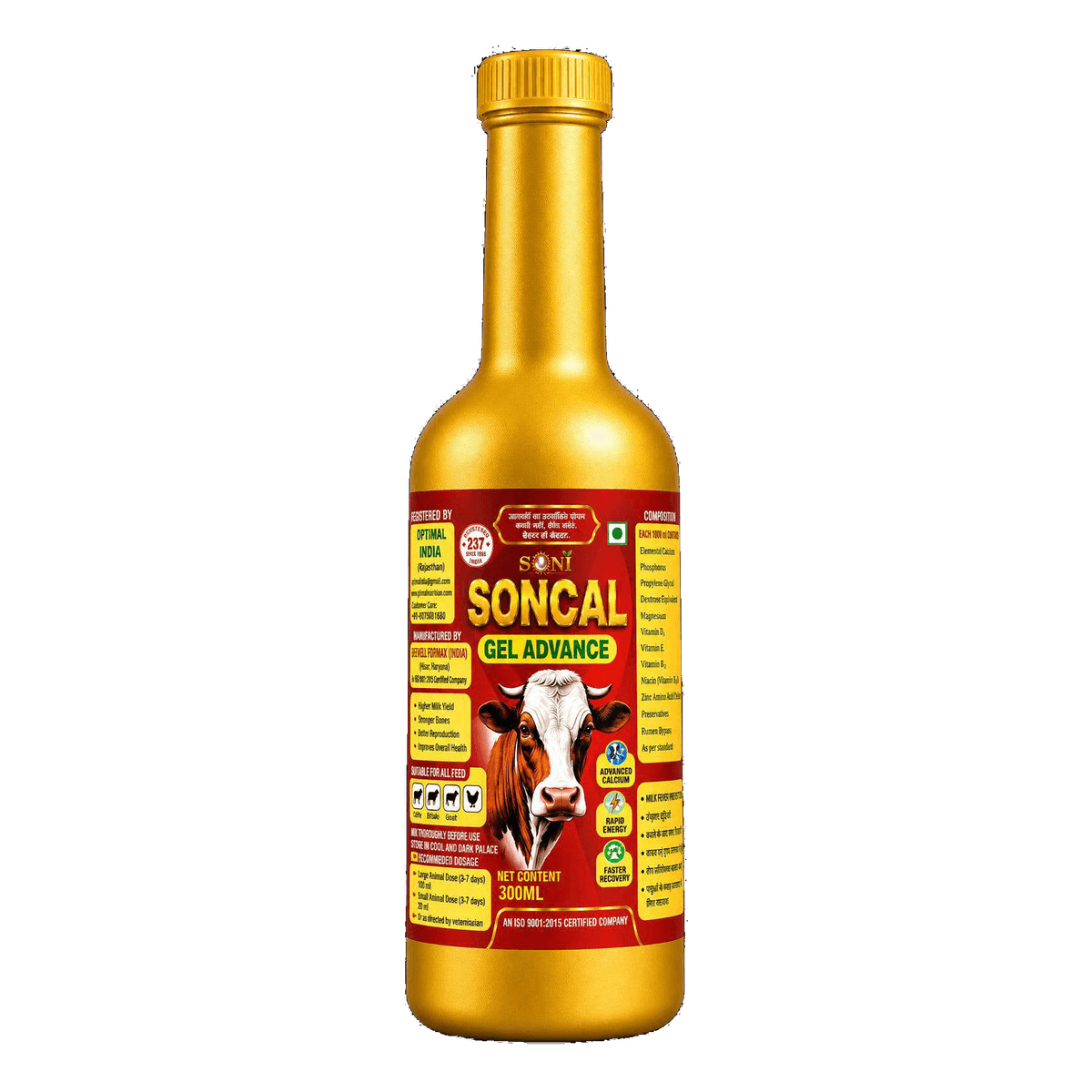
Nutritional Superiority of SONCAL GEL ADVANCE
Packaged in an iconic golden bottle with a smooth non-irritating viscosity, SONCAL GEL ADVANCE delivers high-density emergency and transition nutritional care:
Protocol for Calving Administration
For high-yielding dairy cows, crossbred cattle, and Murrah buffaloes:
Administer by gently placing the bottle tip into the corner of the animal's mouth over the base of the tongue. The palatable gel glides down smoothly without coughing or aspiration risks.
When to Consult a Qualified Veterinarian
Call your veterinarian immediately if:
Frequently Asked Questions (FAQ)
Can I administer SONCAL GEL ADVANCE to a cow that is completely unconscious on her side?
No. Never administer oral liquids or gels to an animal that is unconscious or has lost swallowing reflexes, as fluid may enter the lungs (aspiration pneumonia). Call a veterinarian immediately for intravenous therapy.
What is the primary cause of cold ears in a freshly calved cow?
Cold ears and cold extremities are hallmark physical signs of hypocalcemia (milk fever). Low blood calcium causes peripheral vasoconstriction and reduced cardiac output, leading to hypothermia in extremities.
Does administering calcium gel reduce the risk of retained placenta?
Yes. Expelling the placenta requires vigorous, rhythmic contractions of the myometrium (uterine muscle). Adequate blood calcium ensures strong uterine contractions, reducing retained placenta rates by over 70%.
How does SONCAL GEL ADVANCE differ from regular liquid calcium?
Regular liquid calcium is designed for daily maintenance and contains low calcium density that absorbs slowly. SONCAL GEL ADVANCE is an emergency, high-density ionic gel formulated for instantaneous absorption within 30 to 45 minutes to prevent acute calving paralysis.
Shop Formulations Mentioned in this Article
SONCAL GEL ADVANCE
Advanced Calcium • Rapid Energy • Faster Recovery • Milk Fever Prevention
Dr. Surender Soni, B.V.Sc & A.H.Verified Author
Veterinary expert specializing in dairy cattle clinical nutrition, rumen metabolic disorders, and mineral bioavailability. Dedicated to providing dairy farmers across India with evidence-based guidance to maximize milk production and animal longevity.