Bypass Fat and Bypass Protein in Dairy Cattle: Maximizing Milk Fat Percentage & SNF
Dr. Surender Soni, B.V.Sc & A.H.
Veterinary Nutritionist & Technical Director
In the dairy industry across India, farmer milk procurement pricing is determined strictly by two biochemical metrics: Fat Percentage and Solids-Not-Fat (SNF). Many dairy producers struggle with declining fat test during peak lactation, summer heat stress, or periods of lush green fodder feeding. Attempting to boost dietary energy by simply increasing grain or vegetable oil feeding backfires by disrupting rumen microbes and causing milk fat depression. The proven nutritional solution lies in feeding Rumen Bypass Fat and Bypass Protein.
The Biological Barrier: Why Normal Dietary Fat Fails in Ruminants
Ruminants evolved to ferment structural plant carbohydrates, not digest large quantities of free dietary lipids. When dairy cattle are fed more than 3% to 4% unprotected free vegetable oils or oil cakes:
To supply concentrated energy without harming rumen fermentation, dietary fats must be rumen-protected (bypass fat). These lipids pass unaltered through the rumen neutral pH environment (pH 6.2–6.8) and enter the acidic abomasum (pH 2.0–2.5), where they dissolve and are enzymatically absorbed with high efficiency in the small intestine.
The Dual Importance of Bypass Protein and Sodium Acetate
While bypass fat delivers dense caloric energy, milk fat synthesis also requires specific metabolic precursors and structural proteins:
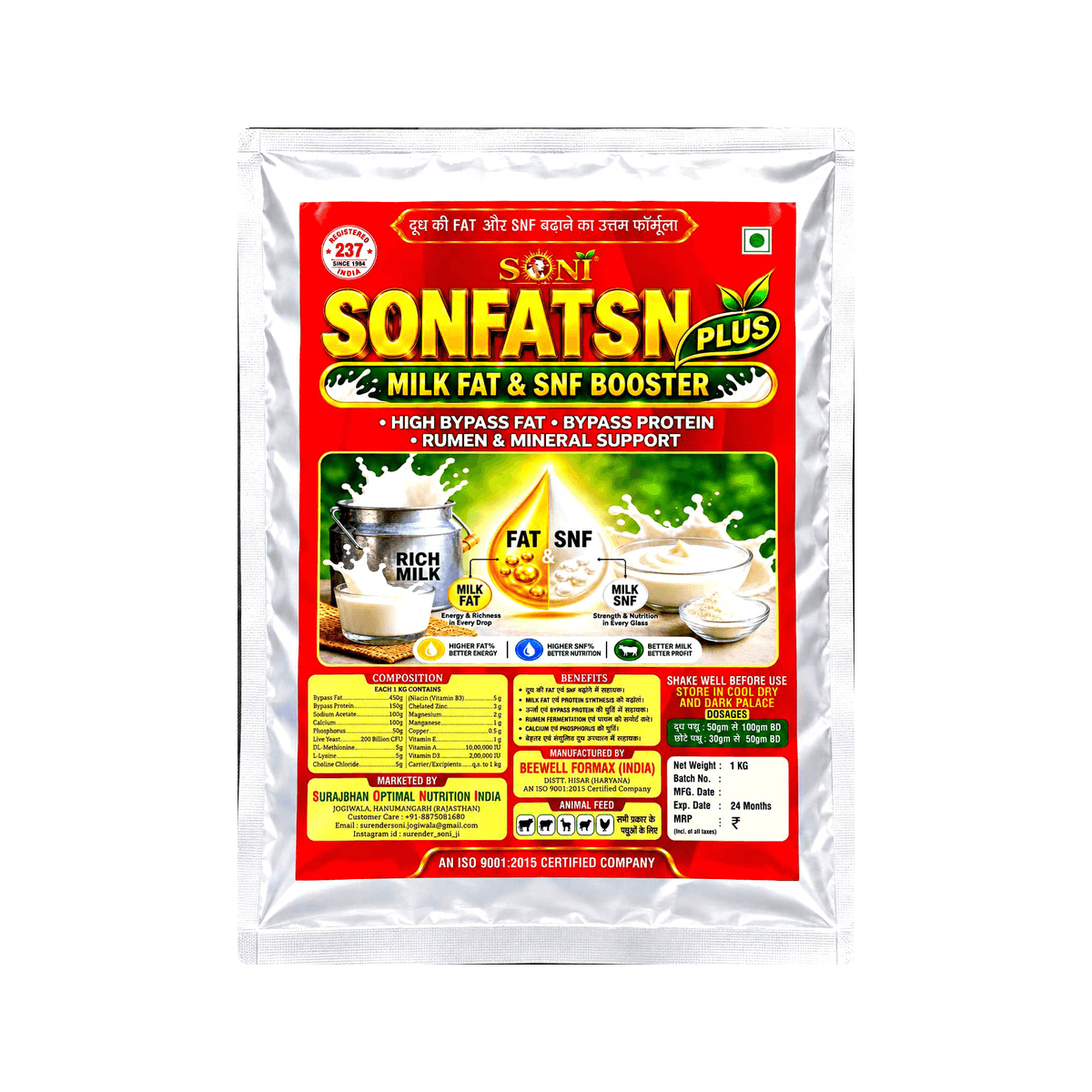
Advanced Nutrition with SONFAT SN PLUS
Formulated specifically to maximize dairy payment receipts, SONFAT SN PLUS delivers a balanced high-potency formula:
Mitigating Heat Stress and Body Condition Loss
During the sweltering summer months across northern and western India, dairy cattle experience severe heat stress. Under elevated ambient temperatures, cows reduce feed intake while expending immense energy panting to stay cool.
Because fat digestion produces substantially less Heat Increment of Feeding (HIF) compared to the fermentation of fibers or starches, feeding SONFAT SN PLUS allows dairy farmers to pack dense caloric energy into smaller ration volumes without overheating the animal. This prevents the catastrophic post-calving body condition crash (Negative Energy Balance) and prevents early lactation milk drop.
Recommended Feeding Schedule
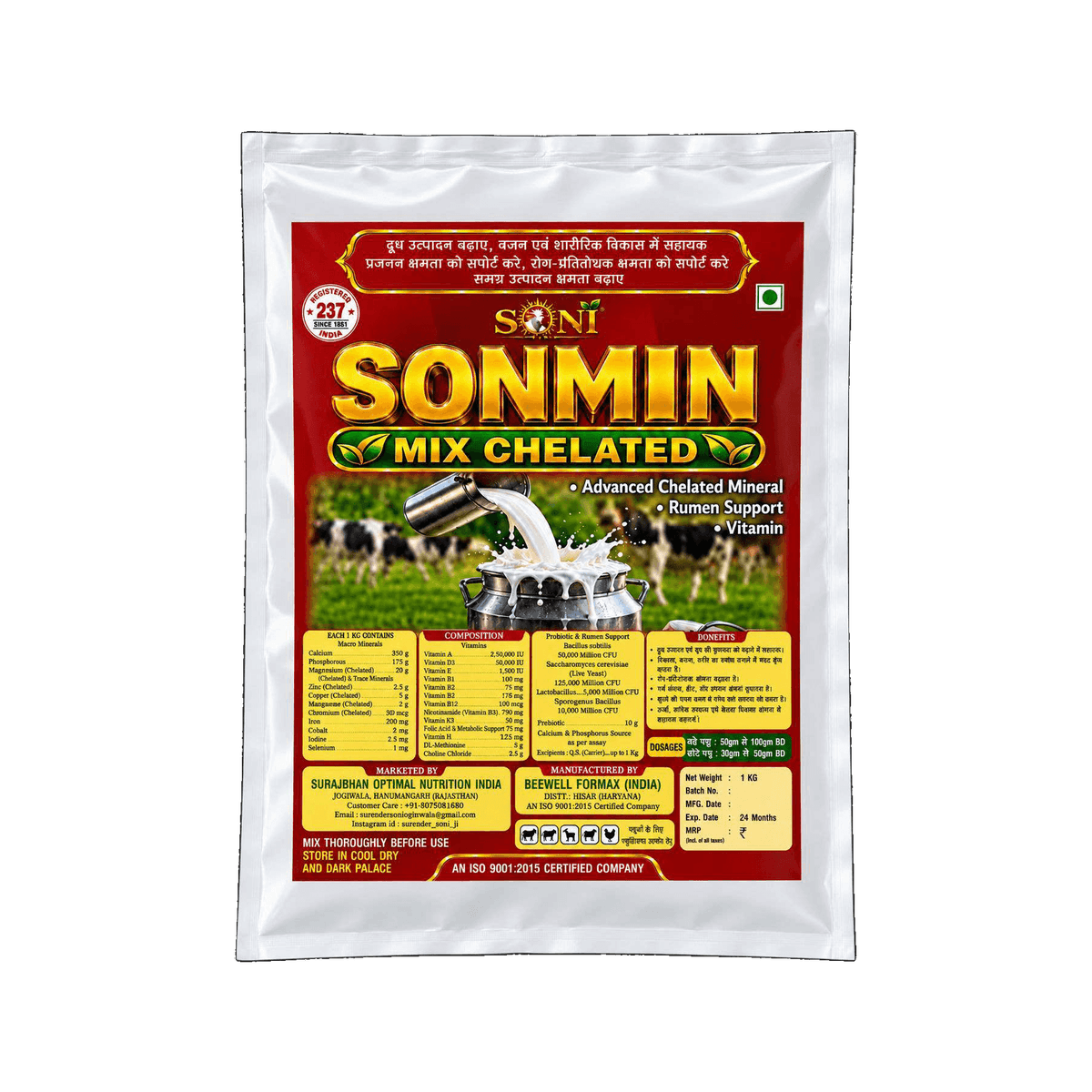
To support complete digestive and mineral assimilation, pair SONFAT SN PLUS with daily SONMIN MIX CHELATED feeding.
When to Consult a Qualified Veterinarian
Consult a veterinary professional if you notice:
Frequently Asked Questions (FAQ)
How soon will I see an increase in milk fat and SNF after starting SONFAT SN PLUS?
Most dairy farmers observe noticeable improvements in milk fat percentage (0.3% to 0.8% increase) and SNF within 5 to 7 days of consistent daily feeding.
Can bypass fat cause loose dung or diarrhea in cows?
No. Because the bypass fat in SONFAT SN PLUS is fractionated and rumen-protected, it does not coat rumen bacteria or trigger digestive upsets. Stools remain firm and normal when fed at recommended dosages.
What is the difference between ordinary vegetable oil and bypass fat?
Ordinary vegetable oils are toxic to rumen cellulolytic bacteria, lowering fiber digestion and causing milk fat depression. Bypass fat is chemically formulated to pass through the rumen without dissolving, releasing its energy safely in the small intestine.
Does feeding bypass fat help buffaloes in summer?
Yes. Buffaloes are particularly prone to heat stress due to dark skin and fewer sweat glands. By supplying high energy with low internal heat production, bypass fat keeps buffaloes in positive energy balance and sustains peak lactation through hot weather.
Shop Formulations Mentioned in this Article
Dr. Surender Soni, B.V.Sc & A.H.Verified Author
Veterinary expert specializing in dairy cattle clinical nutrition, rumen metabolic disorders, and mineral bioavailability. Dedicated to providing dairy farmers across India with evidence-based guidance to maximize milk production and animal longevity.